
The Science of the Tow: What It Really Takes to Move a Modern RV
At Teshua Farms RVs, we live and breathe the RV lifestyle. Whether we are conducting a pre-trip inspection for a customer or hauling one of our own luxury fifth wheels down the interstate, we treat RV towing as a science.
While our rental customers enjoy the luxury of our delivery-only service—meaning you never have to hitch up or haul the rig yourself—we believe an educated RVer is a safer, happier RVer. Many of our clients are future owners or current enthusiasts who want to understand the mechanics behind moving a "house on wheels."
Safety is not just about driving slowly; it is about physics, weight distribution, and matching the right machine to the load. Here is the expert insight into what actually happens between the truck and the trailer.
The "Big Three" Numbers: GVWR, Payload, and Tow Capacity
The most common mistake we see in the RV world is looking at the wrong number. You’ll often see commercials boasting "14,000 lbs Tow Capacity!" But in the real world of RV service in Alabama, that number is rarely the limit you hit first.
GVWR (Gross Vehicle Weight Rating): This is the absolute maximum weight a vehicle is rated to carry, including its own steel frame, fuel, passengers, and cargo.
Payload Capacity: This is the golden number. Payload is the weight your truck can carry in the cab and bed. This includes the driver, the cooler, the tools, and crucially, the pin weight (for fifth wheels) or tongue weight (for travel trailers) of the RV.
Tow Capacity: This is the pulling power.
The Expert Reality: You will almost always run out of Payload Capacity before you reach your Tow Capacity. A heavy trailer pushes down on the truck's rear axle. If you exceed that payload limit, you compromise steering, braking, and suspension integrity.
Diesel vs. Gas: It’s About More Than Fuel Economy
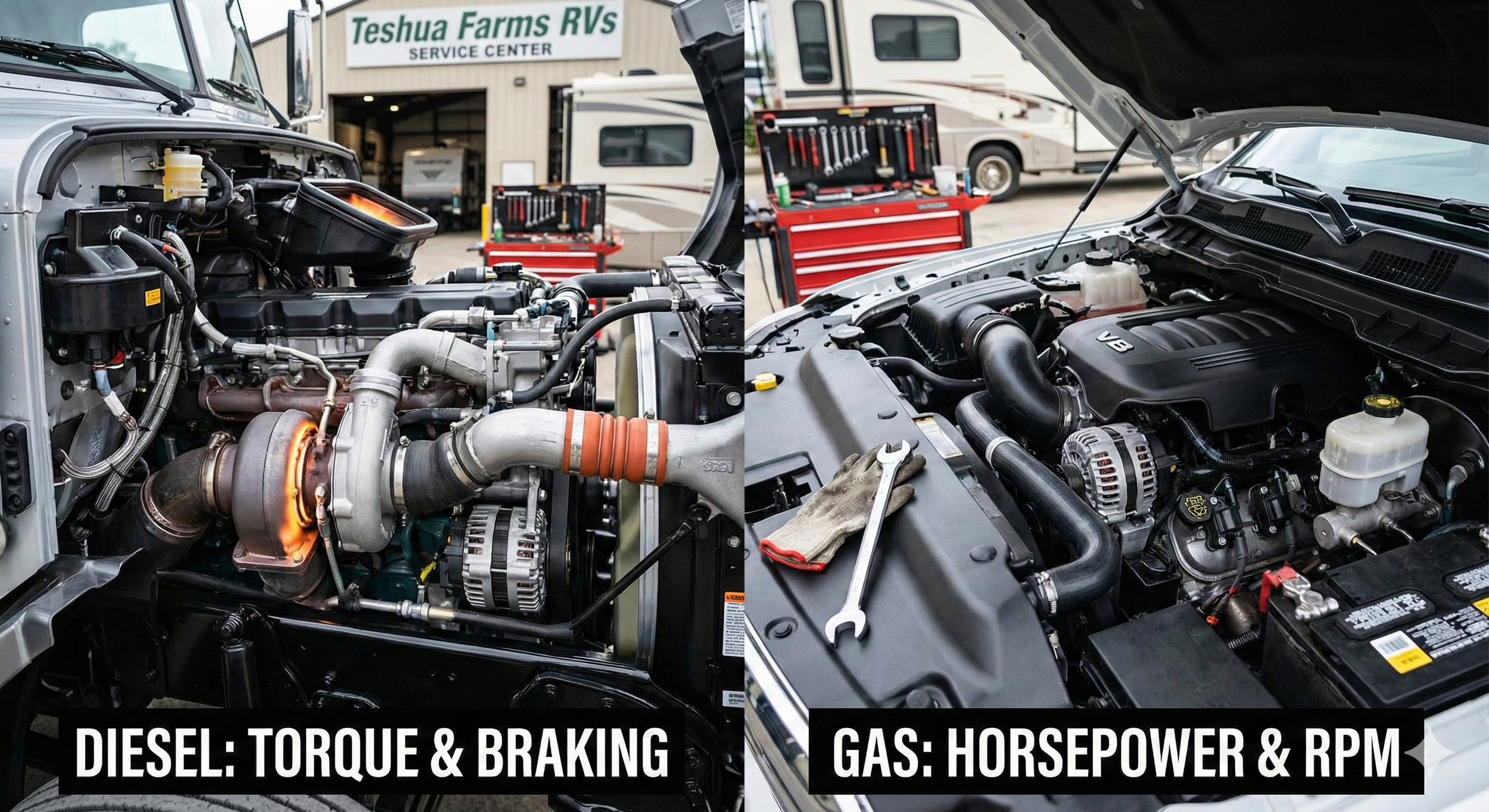
One of the most frequent questions we get at our RV service in Birmingham center is: "Do I really need a diesel?"
While modern gas engines have incredible horsepower, a diesel engine offers two distinct advantages for towing heavy loads:
Torque: Diesel engines produce massive low-end torque. This allows the truck to get a heavy load moving without straining the engine at high RPMs.
Exhaust Braking: This is a safety feature that gas trucks generally lack. An exhaust brake uses the engine's backpressure to slow the vehicle down on steep descents. This saves your physical brakes from overheating and fading—a critical safety factor when navigating hills during RV rentals in Georgia or the Appalachians.
The Dually Difference: Stability in Motion
You’ve likely seen "dually" trucks (one axle, four rear wheels) on the road. When is that extra width necessary?
A dually isn't just about carrying more weight; it's about lateral stability.
Wind Resistance: When a semi-truck passes you, it pushes a wall of air against the side of the RV.
The Fulcrum Effect: A single rear wheel acts as a pivot point. A dually, with its wider stance, resists that pivoting motion.
For large toy haulers and luxury fifth wheels, a dually prevents the "tail wagging the dog" sensation, ensuring the truck dictates where the trailer goes, not the other way around.
The Half-Ton Truck & Large SUV: Can vs. Should
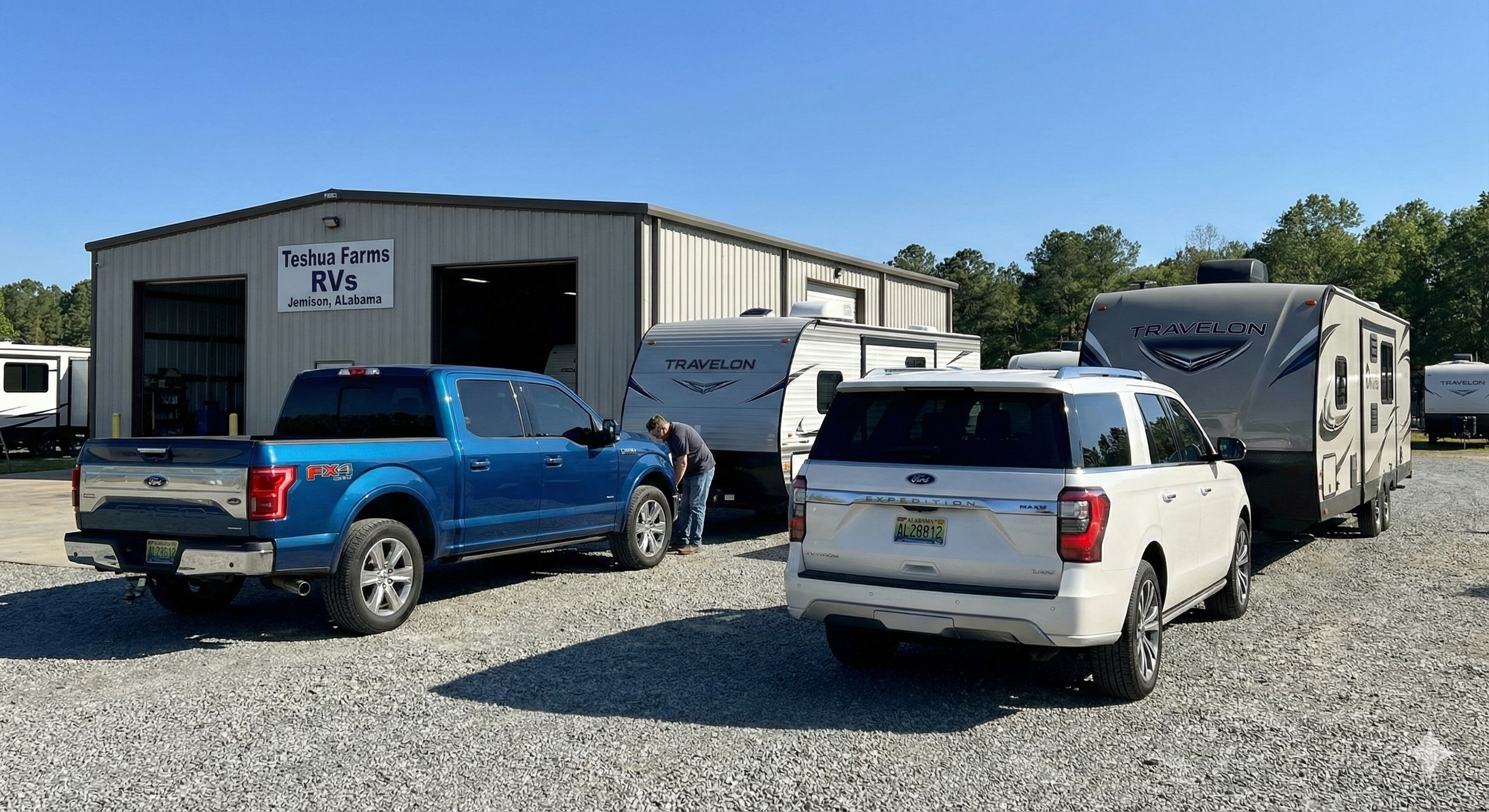
Can a half-ton truck (like an F-150/1500) or a large SUV pull a camper?
Technically, yes. Safely and comfortably? It depends.
Half-ton trucks are built with softer suspension for a comfortable daily commute. When you hitch a heavy travel trailer to them, that soft suspension can feel "squishy" or unstable at highway speeds. For smaller, lightweight trailers, they are fantastic. But for the large rigs we feature in our fleet, they often lack the wheelbase and suspension stiffness required for safe, long-distance highway travel.
Weight Distributing Hitches: The Geometry of Safety
Unless you are towing a very small trailer, a Weight Distributing (WD) Hitch is non-negotiable.
When you drop a trailer onto a hitch, the back of the truck squats and the front of the truck lifts up. This removes weight from your front tires, which means you have less steering control and less braking power. A WD hitch uses tension bars to physically leverage that weight back onto the truck’s front tires. It restores the truck’s geometry, ensuring that when you turn the steering wheel, the vehicle actually turns.
Experience the Difference
Understanding these dynamics is why Teshua Farms operates the way we do. We don't just "drop off" campers. We use professional-grade, heavy-duty tow vehicles properly matched to our RVs to ensure safe delivery for every booking.
Whether you are booking RV rentals in Florida for a beach getaway, looking for RV rentals in Alabama for a local retreat, or need expert RV service in Alabama for your own rig, you can trust that Teshua Farms prioritizes safety and technical expertise above all else.
Want to learn more about maintaining your own rig? Our service department is open and ready to help you tow safely. Click here to schedule a service appointment or Sign up for our newsletter for more technical deep dives and rental specials!
